Cristina's Library

Joie de livres

There is music.

Above
the soothing comfort of tragic routine,
there is Music.
A magical testimony to reality,
aloof and a capella.
Allegro, piano, staccato—
Happy, drunk, smiling,
there is Music;
he is swinging me around, a Round,
singing secretly in my ear.
We  d r i f t  away
in a perfect caprice,
two lines in parallel motion;
heard, yet assured
of exclusion from the score.
If you sift through memory, you will recall
Music. You fell into his arms one evening.
We shared a kiss and stopped
in one of Time’s infinitesimal interludes,
between one tempo and another,
for years.
Life seems to not exist beyond
the silence of our conversation.
Two lovers dancing amidst notes and words,
black and white and immobile, casting a shadow
on the sundial of our bliss.
Lost, confused, scared,
eyes squeezed to shut out the world.
Time cannot cease, but I believe
Love is a sweeter demise than happiness.
-CR

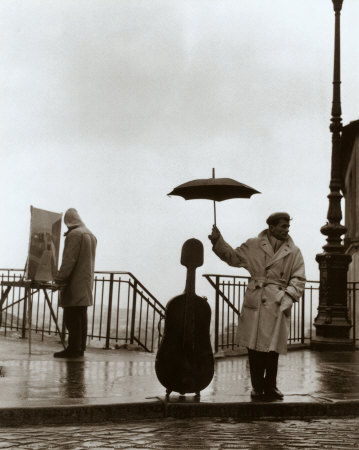
Musician in the Rain – Robert Doisneau, 1957

Le Violin d’Ingres – Man Ray, 1924

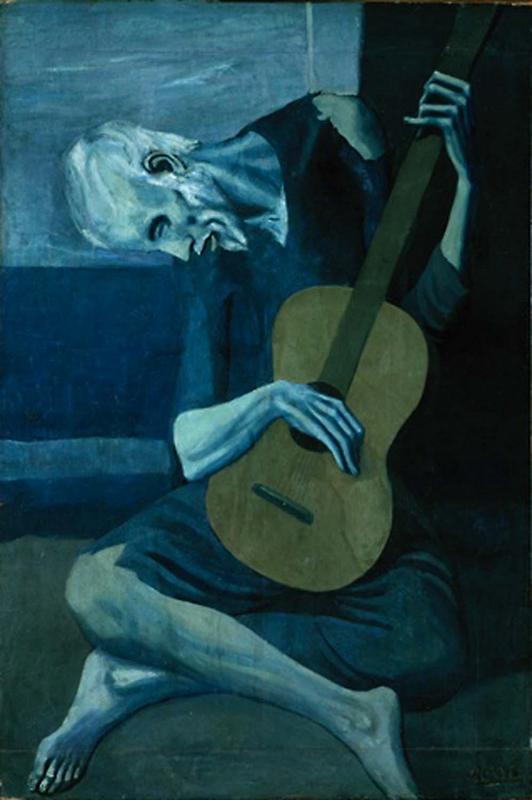
The Old Guitarist – Picasso, 1903

In the name of September…

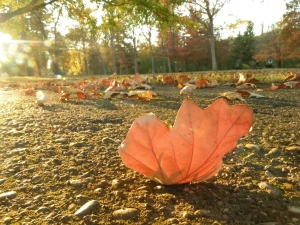
Fall is the onset of the most beautiful death we can ever know. Each earthy element of life begins to wane, their breath slowing, in preparation for Winter. Leaves burn red, orange, gold, and deep mustard, before curling in at the edges and floating slowly, lifelessly, to the ground. The sun seems to lose strength day by day, finding it harder and harder to keep its eyes open, and a cool, diaphanous wind settles over the city.
The world is getting ready to die.
And yet, we feel so full of life, the nature around us vibrant and colorful and bursting with flavour. Autumn makes me feel peaceful and content, pensive and exhilarated. It is the most wonderful time of the year — my favourite! Apple-picking with Maria. Pumpkin-flavoured things, including the glorious pumpkin-spiced latte (a new part of my weekly ritual). Warm apple cider, and cool leather jackets. Sweaters. Yams. Halloween. Thanksgiving. Fall festivals. Fall birthdays, including mine. Football. Gray skies above, gossamer clouds below. Afternoon drives in the weakened sun, a brilliant harmony of autumn colours whirring by your window. Really, does it get any better than that? I’ve been so excited for Fall to start that I started wearing scarves in August (I leave for work at 6am…it’s cold at that time).

My life has completely changed this fall. It’s the first September I’m not going back to school. I still cannot believe it. It’s sometimes difficult to come to grips with the reality of change, especially when you’ve been accustomed to something for so long. Where did the time go? As a total nerd, I was always excited about going back to school. I used to get tired of summer mid-August, unable to mask my excitement for new notebooks and bookmarks, back-to-school shopping, organizing my pencil case, and getting my outfit ready for the first day — I don’t think I was ever very fashionable, but I tried. I did.
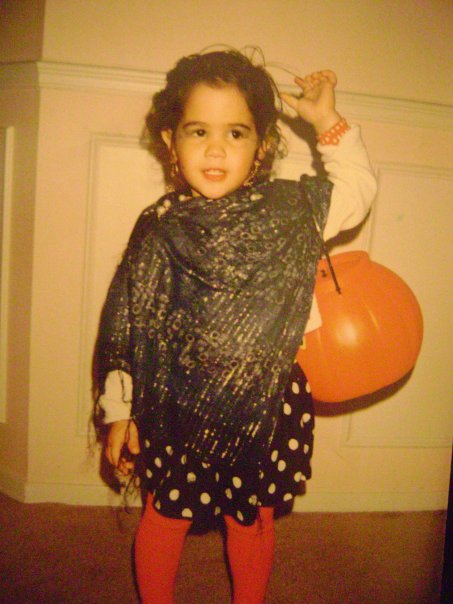
In elementary school, my brother and I would walk through the park in front of my house to get to school, kicking leaves all over the place, our bodies slightly slanted from the weight of our knapsacks. But, suddenly, Halloween dance-a-thons, running door to door, yelling “trick-or-treat!”, and trips to the pumpkin farm gave way to high school costume parties, bad karaoke, and wild nights. And, just yesterday, I felt like I was a confused and enormously shy first-year at U of T walking through Queen’s Park with a map, trying to look cool and unconcerned about being an hour late for a class I couldn’t find.

But, alas, 5 wonderful years have passed since then. I wouldn’t change a thing.

At the end of August, I started my internship at HarperCollins Canada, which is turning out to be a valuable learning experience. Everyone has been extremely helpful and kind from the first day, and I’m meeting a lot of great people. The amount of mailings and catalogs to design and things to print and pitch letters to write and calls to make is slightly daunting, and sometimes exhausting. But always abetted by my ambitious and inspiring intern allies in Intern Ally, Jane and Siobhan, who keep my spirits up and my tomato-intake high. I feel like I’m exactly where I want to be. Perks: FREE BOOKS, which I am constantly gifting to friends and family. If you’re a close friend, love, or family member of mine, you’ve probably already received a book from me. The piles of books on my desk inspires me, each day, to write, and I do. When I have a free moment, when an idea pops into my head, I scribble into the beautiful Christian Lacroix journal that my good friend, Danielle, bought me. In fact, I hope to take some time off in the Winter to seriously pursue my writing — if I don’t do it now, I doubt I ever will.
In other book-related news, I joined a book club! Our first meeting was a success, and they’re a great group of girls. I can’t wait to discuss the first book on our list: The Paris Wife by Paula McLain. I’m not finished yet, but I’m in love with it so far–expect a full review soon!

-CR

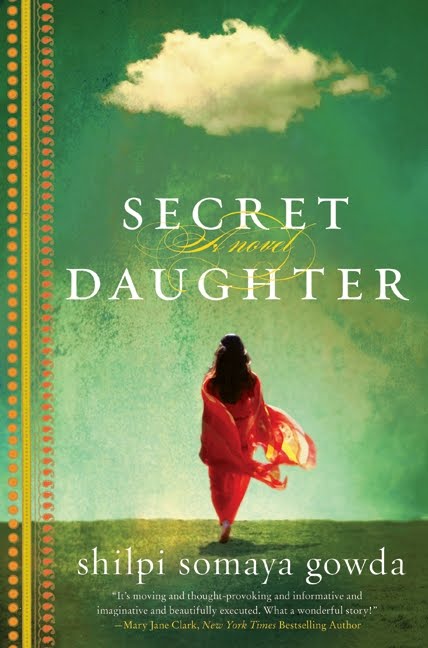
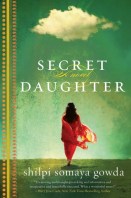
Secret Daughter

“Sometimes, as she has well learned in life, one’s actions must precede the emotions one hopes to feel”

Secret Daughter, the stunning debut novel from Toronto-born author Shilpi Somaya Gowda, is captivating, emotional, and rich in detail. The beautiful prose, intricate storylines, and riveting characters drew me in by the first chapter. I loved this book from beginning to end.

The novel begins in Dahanu, India in the midst of the monsoon season, when Kavita Merchant gives birth to a baby girl–without the aid of a midwife. Out of fear of her husband’s reaction, and that of the society in which she lives, Kavita leaves the newborn at an orphanage in Bombay in order to save her from the merciless hands of a culture that abhors female births. The novel spans 2 decades, stringing together the story of Kavita, her husband, Jasu, the girl, Usha, and American doctors, Somer and Krishnan — Usha’s adoptive parents.

Usha, we learn, means “hope” — Gowda plays with this concept throughout the book; her characters pray for it, question it, turn away from it, lose it, find it, and, ultimately, believe in it. We learn, at the onset, that Kavita gave birth to a daugther before; however, she was given up, quickly and brutally, to her husband. Gowda describes her anguish in heart-wrenching detail:

“Kavita spent the next two days curled up on the woven straw mat on the floor of the hut. She did not dare ask what had happened to her baby. Whether she was drowned, suffocated, or simply left to starve, Kavita hoped only that death came quickly, mercifully. In the end, her tiny body would have been buried, her spirit not even granted the release of cremation. Like so many baby girls, her first-born would be returned to the earth long before her time.”

Reading through Kavita’s personal trajectory from an accepting, acquiescent wife to a strong woman willing to risk her life in order to save her daughter’s was eye-opening. Determined for this daughter to live, she stands up to Jasu, her initially domineering, frightening husband, demanding space and time. And, concealed from him, she hands her child over to the orphanage and walks away, the devastating sound of her shrill screams resounding in Kavita’s ears for the rest of her life. Jasu and Kavita struggle for much of their life, after their son (they finally have one) is born, moving from the slums to Bombay in pursuit of bigger dreams, only to have them shattered upon arrival, and year after year.

Meanwhile, in California, Asha — as she is called — grows up in a normal American household, wondering why her eyebrows are so bushy and why she and her adoptive mother, Somer, seem so far apart, while she and her father, Krishnan, understand each other on a completely different level. Both physicians, Somer is a California blonde and Krishnan is Indian; having fallen in love in med school, they married, and, sadly, discovered that Somer could not have children. Scared that Asha will distance herself from her, and insecure about her ability as a mother, Somer is reluctant to engage in any conversations with Asha about her past or her heritage. Throughout the novel, she consistently denies the part of her family that is Indian, creating discord between herself, her husand and her daughter. By the time that Asha is twenty years old, she has not been to India since the time she was in the orphanage. Deeply curious about her past, Asha decides, in the summer before college, to go to India. She wins a journalism scholarship, hoping to visit her father’s family, learn about who she is, and, lastly, contact her biological parents.

None of the characters in Secret Daughter are one-sided; they are full of good qualities and full of flaws. This is the mark of a well-written novel. There is a great, many-layered complexity in the relationships between parent and child, husband and wife. For example, Jasu seems, initially, terrifying; by the end of the novel, we actually sympathize with him, as readers. The novel begins and ends with his devotion to finding the truth in order to bring peace back to his and Kavita’s life. In closing, Kavita describes her marriage:

Yes, he has made mistakes and poor decisions along the way, but her husband has grown to be a good man. They have grown together, toward one another, two trees leaning on each other as they age.

Gowda presents a powerful, touching story about self-identity, marriage, the definition and importance of family, and indirectly, India. The novel does a wonderful job of conveying the contrast between “the two Indias”, describing, in great detail, Indian lifestyle, traditions, language, advantages, and disadvantages, truths and myths, and, of course, FOOD (I am dying to go to a good Indian restaurant in Toronto, after reading this — any suggestions?) I felt extremely heartbroken and shocked towards some of the issues Gowda hints at in the novel: bride-burning, sex-selective abortion, drug culture, and rampant poverty. I cannot believe the tragic suffering that women in many parts of the world, at the hands of a patriarchal society with an archaic mentality, continue to endure. I was compelled to do some more research on these topics — you can find some useful information here.

Overall, I really enjoyed the novel and zipped right through it. I only wish Kavita’s son had more of a voice; though he gives his parents money, it is only for the social stigma he feels without it — he is the only character that seems to be purely selfish. However, it neatly came together at the end, and was completely unpredictable — in fact, it had a very different ending than the one I had envisioned. And it was better that way.
The Help

“Ever morning, until you dead in the ground, you gone have to make this decision. You gone have to ask yourself, “Am I gone believe what them fools say about me today?”   
— Kathryn Stockett, The Help

I am not sure what initially drew me to The Help. Perhaps it was the pleasantly yellow, Impressionist-style background that caught my eye, or its central co-op placement on a table at Indigo Bay and Bloor, which provokes the type of eye-catching, back-cover-skim, grab-and-go purchase that publishers and booksellers cherish deeply. After learning that Stockett had received 60 rejection letters and negative reviews, I was, at first, skeptical about cracking it open on my morning commute for the first time. Put simply, I was so glued to the page that I completely missed my stop! The California Literary Review calls it “an old-fashioned page turner”, and The New York Times hailed it as a “button-pushing, soon to be wildly popular novel” — I couldn’t agree more.
In the middle of the Civil Rights Movement, 1962, three women have decided they’ve had enough of the situation in Jackson, Mississippi. Aibileen, a middle-aged black nurse and housekeeper, has raised seventeen white babies, and finds it harder each day to turn a blind eye to the unfairness of her perpetually devastating, demeaning situation. Minny, a hot-head with a smart-mouth, who has been fired several times due to her impertinence and unabashedly straightforward nature, struggles to keep her newest job, the secrets of her latest employers, and her temper in check. Eugenia “Skeeter” Phelan, a twenty-three year old white college graduate and writer, stifles her angry feelings towards Hilly Holbrook, the novel’s villain, and her inhumane treatment towards the help.
Hilly is a Jackson socialite, advocate of segregated washrooms for the coloured, and self-centered hypocrite. She works tirelessly to campaign for “The Poor Starving Children of Africa”, though contemptuously regards the black people in Mississippi as unintelligent, diseased, and dangerous.
Skeeter, dismayed at what the world she grew up in has become, devises a rebellious plan to secretly befriend and interview the help, these wonderful black women with their myriad stories, and publish them in an anonymous book — if all goes well, she has a chance at her dream job in New York City. Life has dissolved into a boiling pot of Minny’s signature soup with the lid clamped firmly on top, and the three of them are about to cause a monumental explosion in Jackson, forever.
I appreciated the unique narration (Aibileen, Minny, and Skeeter), and the way that Stockett manages to speak in three distinct “voices” throughout the book, which is a testimony to her ability as a writer. Minny was a memorable character; she wasn’t portrayed as either good or bad, but rather a deeply complex woman, her sad past a heavy, debilitating shadow.
Stockett does a good job of constructing multi-faceted, many-layered and, most importantly, human characters, whose emotions of love, anger, triumph, frustration, compassion, good and evil, we can all, inherently, relate to. Aibileen is my favourite character — she was the most developed and insightful of the main voices. Her stories of the children she raised, and the eventual segregation from them, were sad and thought-provoking. However, the characters of Celia, Skeeter, and Skeeter’s mother, I found, were not illustrated as thoroughly, leaving many gaps open for (mis)interpretation.
The issue of racism is highly apparent throughout the novel — it is not one that Stockett frighteningly avoids, or sugarcoats. She is blatant and clear, with a comedic undertone. The voices of her main characters tell stories filtered through slave vernacular, white-collar parlance, and the jargon of 1960s Mississippi.  It is a very phonetically-appealing novel.

“All I’m saying is, kindness don’t have no boundaries.” 

The Help, admittedly, is realms away from anything I have ever experienced first (or second)-hand in my life. Though, somehow, I can see and hear the story, vividly. And, at the end of the book, I feel something. I feel empathy. Anger. Understanding. Inspiration.

 “I want to yell so loud that Baby Girl can hear me that dirty ain’t a color, disease ain’t the Negro side a town. I want to stop that moment from coming – and it come in ever white child’s life – when they start to think that colored folks ain’t as good as whites … I pray that wasn’t her moment, pray I still got time.”    

As for the ending, I was, initially disappointed. I was left wondering about the resolution with her mother, and the fate of Skeeter. It built up a lot of suspense, then ended quite abruptly. Lynn Crosbie, in The Globe and Mail, slammed the novel for its historical inaccuracy and lack of reference to other illuminating writers and events of the time; she also insults readers by claiming that only those lacking education in American history or good Literature would appreciate the book. This is an ignorant, offensive, and self-indulgent comment.
Let us not forget that this is a work of fiction, which means that the author has the right to depict her story in any way she deems fit. Stockett may not have lived through the Civil Rights Movement, but she was born and raised by a black maid in the American South — she has an idea of the race and class dynamics at play in her novel. It is incorrect to assume that there is only ONE version of a particular story and that Stockett got it wrong because her characters don’t cite the “right” authors or events during that time, or didn’t concentrate enough on writers like Harper Lee and Ralph Ellison. Does that mean that Hemingway’s depiction of 1920s Paris is not exhaustive, or that Edith Wharton is tunnel-visioned? Stockett chose her story to be about the social relationships between black maids and the white women for whom they work, against the backdrop of 1960s Mississippi — as she imagines it.
When you think too much about what an authour should have done, you miss out on what they HAVE done.
The book accomplished everything it sought to: it brought the issue of slavery in Mississipi to the forefront, introduced the world to memorable, inspirational characters, and told a story. I had the privilege of having my book signed by Kathryn Stockett at a signing – she was funny, honest, and extremely kind. I’m looking forward to the film directed by Tate Taylor, starring Viola Davis and Emma Stone – in theatres August 10. But I’m seeing it early because my wonderful friend, Ikhlas Hussain (check out her blog), gave me tickets to the advanced screening on August 8!

This was the close

“This was the close. This was the moment. He pressed the golden metal to his lips and whispered ‘I am about to die’.”Harry Potter and the Deathly Hallows, pg. 559

Any person who held Deathly Hallows and read those words 4 years ago knows that heart-stopping feeling that came with a sharp intake of breath and sudden tears, a moment that truly encompassed the utter helplessness of being a reader: the desire to jump in and change the story combined with the bitter knowledge that you already hold the rest in your other hand. The beauty of Harry Potter was growing up with the characters, opening Philosopher’s Stone to find that Harry turned 11 at the same time that you did, and Hermione’s wild hair and awkward appearance mirrored your own. As we matured and aged, so, too, did the books, launching from simple and cautiously curious to larger, more in-depth, and complex. By the end of the series, Potter readers had delved into highly philosophical themes, learned the importance of courage, the power of Love, the necessity of redemption, the definition of personal identity, and the signficance of friendship — and acquired some Latin along the way. There is an inherent sense of understanding amongst Potter fans that is indescribable to others — when we talk about the books, we just know. We understand it in a way that generations who start it now never will, because we grew with it; we awaited Harry’s next adventure with trepidation and a crippling curiosity. We sat at our kitchen tables or under our covers or on our couches or read with the novel hidden discreetly inside our school desks, devouring the book we went to the Indigo midnight release party to buy. We spent our time inbetween books reading FanFiction stories, looking for updates on J.K Rowling‘s website, buying merchandise, and decorating our rooms in Gryffindor memorabilia. Closing the chapter on the Harry Potter decade was much like finishing the last chapter of Book 7; a mixture of emotions washed over me, from sad to happy to understanding and, finally, a desire for more.  Yesterday, I saw the last Potter film, which was, incidentally, the birthday of J.K Rowling — and the boy who lived, himself. This time, however, I had hoped for more plot.

The film was brilliantly executed, its special effects superb, and its depiction of the final battle emotionally-charged.  The scene at Gringotts with that poor dragon had me on the edge of my seat and holding my breath, even though I knew what was going to happen.  Most notably, David Yates’ construction of The Prince’s Tale — that is, the memories of Severus Snape — was beautiful and touching. Alan Rickman’s performance caught me completely off-guard, catapulting from the morose and macabre Snape to a broken, devastated man. Throughout that scene, and the shocked silence in the seconds following it, not a sound could be heard in the theatre other than the emotional sniffs and loud gulps of people trying to maintain their composure. This, truly, was a part that I actually felt more connected with in the film than the book. Film is a different language than Literature, its images often allowing us to establish a sentimental connection with the characters in a way that words cannot.

There are times, however, when the language of Film cannot accurately convey the complicated cloud of details surrounding characters and relationships in the brilliant way that a book can. Though I loved the film, there were a few things that I wish Yates and his team had stayed true to. For example, Neville’s character should have been as celebrated in film as it was in the book. He has a few seconds of fame — blowing up the bridge, speaking out in front of Voldemort, bringing Harry, Ron and Hermione back to the Room of Requirement — but they all seem to be construed as comic relief. In each scene, there is some forced comedic dialogue: he says “Well, that went well”, after the bridge scene, Voldemort’s supporters jeer and laugh at him when he speaks up, and he is quickly overshadowed in the Room of Requirement.  Most disappointing was the crew’s complete dismissal of Neville and Harry’s prophetic alignment, and Neville’s personal trajectory and honour in killing Nagini.  I realize that it is a film, and there is not enough time to illustrate everything in the book, but the directors did not seem to consider some of the most important elements of the story, choosing to concentrate on the action instead. That scene should have been poignant and isolated, but instead it moved rather quickly and he was hardly concentrated on.

While I know some people did not like the comedic relief of the film, I actually enjoyed it — like the book, it has dark themes interspersed with optimism. For example, in the book, after destroying Helga Hufflepuff’s horcrux in the midst of battle, it is described:

“It was nothing,” said Ron, though he looked delighted with himself, “So whats new with you?”

In that way, the film’s comedic relief DID reflect the book’s style. But I was disappointed that the moments with Fred and George seemed rather contrived. Before the battle, the camera shoots George saying, “Ready, Freddy?” Fred nods, and that’s it. They do not capture the moment of his death, or the last laugh on his face, as the book did. We lose its importance.

Further, Molly Weasley would not have smirked after killing Bellatrix, as she did in the film — it was a serious, intense moment in the book, a death that mirrored her cousin Sirius’, one that should not have been played out like a “ha-ha” moment. What struck me the most was Harry’s utter lack of regard for Ron upon his decision to die; he hugs a sobbing Hermione with fervor, yet does not even glance at Ron before he leaves. It did not feel right. Lastly, Voldemort’s weird and crazy laughter after “killing” Potter, the uncomfortably awkward hug with Draco, and the theatrical hand movements actually made me (and the rest of the theatre) burst into laughter, ourselves — it was just strange. The presentation of Potter’s body should have been as dramatic and emotional as it was in the book.

I didn’t hate the movie — I really did enjoy it and would definitely see it again. I just felt that there were so many things (from the first movie) that they should have included and rethought. One thing that the films accomplished was its wonderful portrayal of the Story of the Three Brothers — not only with the Burton-like depiction (see below), but also the intertwining of Voldemort, Snape and Harry’s story. In the book, before Harry greets death, he speaks of Hogwarts: “But he was home. He and Voldemort and Snape, the abandoned boys, had all found home here.” The Story of the Three Brothers is played out in them: Voldemort, the one who died for Power, Snape, the one who died for Love, and Harry, the one who greeted death as an old friend.

JK Rowling had no idea she would change the world after the release of the first book on June 30 1997, possibly one of the most historically significant dates in the world of Literature. 13 years later, we still love the Boy who Lived, and his story that forever will.

Mischief managed.