The Paris Wife
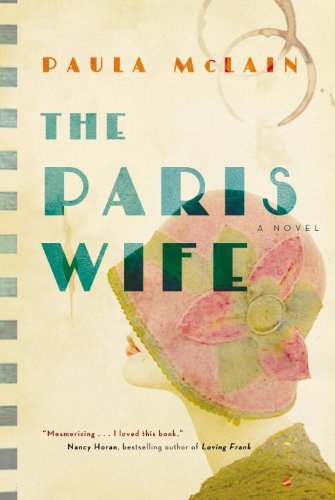 “I wasn’t at all convinced I was special, as Ernest was. He lived inside the creative sphere and I lived outside, and I didn’t know if anything would ever change that.” The Paris Wife by Paula McClain.
Nothing better describes Hadley, Ernest Hemingway’s first wife, than the above quote. The Paris Wife is written in the voice of Hadley in the early years of her marriage, from St. Louis to Paris, and all over Europe: Spain, Switzerland, Austria, Italy, France. Paula McClain accurately depicts Hadley as a woman constantly trying to find her place in the fast-paced, high-strung, clamorous world of 1920s Paris. Their love is young, innocent, real and pure, its longevity and simplicity envied by their close friends. Hadley is, however, plagued by the unfortunate circumstance of being years older than her husband, rendering her unable to become accustomed to the era’s social culture and lifestyle, one that is so radically different from her own.
The novel follows Hadley and Ernest, the man and myth as you’ve never seen him before, throughout the early years of his budding 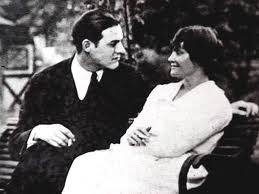 writing career, chronicling the endless and undying support she gave him. But, in my opinion, there’s a difference between supportive and submissive, understanding and acquiescent, selfless and unambitious. Hadley seems to embody the role of a pushover, never reacting or standing up for herself when it came to Ernest’s blatant infidelity. She has no personal ambition or life, other than to support Ernest. She has nothing without him, as she continually reminds herself.
I often wanted to shake her and tell her to be her own person.
Even when Pauline, the other woman, CRAWLS INTO BED and sleeps with Ernest — while Hadley is on the other side of the bed — she closes her eyes, knowing exactly what is happening, and does absolutely nothing. Reading this part made me cringe. I was actually so angry — with him, for being such a disrespectful ass, with Hadley for letting both of them step all over her, and with Pauline for having the gall to do such a thing.
I asked myself, “How can Pauline possibly write them BOTH letters, continue to try to maintain a friendship with Hadley, barge in on their vacation, etc?” And I realized, after some reflection, that this was simply the nature of the time. I understand that it’s easy to hate her (and I did, at first) but, to Pauline, this was normal because lifelong marriage was so far-fetched to their society. Throughout the book, marriage is portrayed in a dark light, from the failure of Hadley’s sister’s marriage, to the confusing and open relationships between their free-spirited friends, who negate marriage, to the eventual demise of Hadley and Ernest’s partnership — and, as we later learn, Hemingway’s 4 short-lived successive marriages. It made me think of the implications of marriage — what did it mean, and did it matter? Certainly, it did not to the free-form society surrounding Hadley.
It’s interesting to note the transgression of marriage from early times to today. From the Ancient Greeks until the late 16th century, due to the politically necessary nature of marriage, for monetary gain or advancement in status, many believed that true love was incompatible with marriage, and can only flourish in adultery. In the 16th century, French essayist Montaigne wrote, “Love’s a bore—any man in love with his wife must be so dull that no one else could love him.” It was not until the 1850s that figures like Queen Victoria began to advocate sexual morality, and the norm shifted to the consideration of married women as pure and chaste. This was the era that Hadley, an old soul, embraced — a monogamous and chaste marriage, shown in the novel by her love of Henry James and simple Victorian ideals.
But this was not young Hemingway’s idea of life, or the world of the post-war 1920s, the Golden Twenties.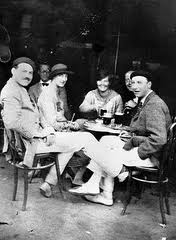 The only time Hadley shows any sense of self-respect is when she finally leaves him. I was happy for her at the end, but sad that she didn’t demand more for herself earlier on. Perhaps things would have been different. But perhaps they would not have been.
True love and first love exist, but people come into your life at certain points for certain reasons. Hadley was integral to Hemingway’s writing career; he needed her to ground him, to bring him back to Earth, to support his fragile and moody character while he tried to accomplish his dreams and find himself. And she needed him to move past her idealistic and predictable and lonely existence to a life of fulfillment and love. They helped each other in so many ways. Do you think he would have been better with Hadley? Maybe so, in some ways, but for a price. He wouldn’t have become who he became. I think his life would have stopped if he succumbed to normalcy.
It all happened as it was meant to. It was meant to end.
First love does not necessarily mean last love. Sometimes it does, of course, but that’s not true for everyone. A couple may be in love, but not right for each other — or not right for each other anymore. And it was evident that, no matter what Hadley may have done earlier on, whether she adamantly put her foot down or not, Ernest would not have changed — he was at a different point in his life, insatiable and full of an ambition that Hadley lacked. She recognizes this in the book. It wouldn’t have changed. I still liked Hemingway throughout the book, and I truly enjoyed learning so much about him, but I only wish he had shown Hadley an ounce of respect by ending things the right way.
In my opinion, Hemingway belongs to the class of men who are capable of love, but not marriage. Why stay together in unhappiness, when it’s clear that it’s no longer right for either party? I wanted her to be happy, in a relationship that was right for her. Ultimately, she remarried and was. I was close to tears at the end of the book because their love story was so moving and emotional, and Ernest’s eventual suicide left me distraught. Regardless of the differences that could not be helped, they did love each other their entire lives. And that is still beautiful.
In all, I loved this book, and enjoyed Paula McClain’s writing style. McClain is a poet, and it comes across brilliantly in her writing; her prose was beautifully constructed and lyrical. She effectively captured the flavour of the era, and Hadley’s distinctive voice. Her historical facts and nuances are accurate and intriguing. Be warned: you’ll want to go to Paris after reading this! Interesting note: watch Midnight in Paris … a great film companion to the book!



 Cristina's Library