Cristina's Library

Joie de livres

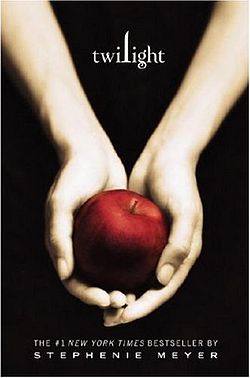
Twilight

At the end of November of this year, I challenged myself to read the entire series by December, and I did it. I went in with an open mind, and it took me 10 days of consistent reading, but I did it. My feelings were up and down — there were things I liked and things I didn’t. My review of Book #1:

Twilight – It’s not a good sign when I feel like I need to push myself through a book. I didn’t hate it, but I didn’t love it. Meyer’s writing is actually awful in the first book — the dialogue is stilted and painfully awkward, there are inconsistencies, and attempts at suspense were lost with random Bella-thoughts. Ex. *after talking to Edward* “So few questions had been answered in comparison to how many new questions had been raised. At least the rain had stopped.” …What?? What does one have to do with the other? I won’t mention the number of words used unnecessarily and out of context. It felt more like I was reading the day-to-day diary of a boring teenage girl. I don’t know if I feel this way because I read it at 23 instead of 18, but it just had me rolling my eyes.

Bella, our main character: There’s hardly any description of her — except that she’s plain, average in every sense, and doesn’t relate well to people. Somewhere later on, it’s mentioned that she’s a brunette. We surprisingly know very little about her. Yet, somehow, every guy in school is craving her attention and in love, for apparently no reason — she is unbearably insecure, has no social skills, and hardly speaks. She sees Edward Cullen in the cafeteria and feels drawn to him because he is a beautiful creature. A few days later, she falls “unconditonally and irrevocably” in love with him for the same reason. Admittedly, I was interested to find out why Edward was ignoring her, and what was going to happen, but those feelings slowly dissipated. 3/4 of the book consists of sappy fluff between Edward and Bella. It felt romantic at first, but then got annoying and redundant. He is always giving her a half-smile, or acting cold and furious.

I tried so hard to understand their love, but I didn’t. The only reason given for Bella’s love is that Edward is beautiful, and the only reason given for Edward’s love is that Bella’s blood smells good. Edward is described in meticulous and painstaking detail, including his breath. That would have been acceptable, except that a part of him was described every few pages. I get it — he’s stunningly beautiful. Bella is constantly in awe and confusion over how this creature, or any boy, for that matter, could be interested in her. There is no plot until page 450.

Meyer then tries to build their relationship and help us understand why they love each other with a long slew of interrogation about each other’s lives, disguised as “conversation”. Honestly, I did like Edward and I thought he was interesting, but the Edward-Bella romance felt patronising, paternal and creepy. He chuckles at her comments, treats her like a little girl, and watches her sleep. It’s all portrayed as normal behaviour. Bella is so completely and pathetically dependent on him that it’s mentally crippling to be without him. It’s unhealthy, and was hard to read. Some Bella quotes:

*One day, Edward is not at school* “I’d lost my appetite – I bought nothing but a bottle of lemonade. I just wanted to go sit down and sulk.”

*Later in the day, he’s still not at school* “Angela asked a few quiet questions about the Macbeth paper, which I answered as naturally as I could while spiraling downward in misery.”

*The day is over and he didn’t come to school* “Desolation hit me with crippling strength.”

THIS IS BEFORE THEY HAD EVER EVEN SPOKEN.

Meyer creates Bella as such a weak and helpless female character that it’s hard to sympathize with her. Bella has no ambition or confidence; the only thing important to her is being with Edward. I would have liked her more if there was something, anything, that she had in her life, or about her character, that was completely her own, that she truly aspired towards. She doesn’t. She doesn’t seem capable of doing anything right (except for cooking and cleaning — female stereotype?), as she herself often bemoans, and needs to be saved by Edward (who follows her around) every few pages. She literally cannot even walk straight lest she falls down because she’s oh-so-clumsy.

Some messages that Stephenie Meyer conveys through Bella: It’s ok to have no goals or aspirations other than being with someone. Physical attraction is love. Boyfriends are overprotective and jealous because they love you. In fact, as you can see, life is bland and lacking true purpose without a boyfriend. Once you have a boyfriend, it’s ok — and often better — to distance yourself from your friends.

Things I did like: Meyer’s take on modern, contemporary vampires — it’s not the usual coffin/garlic stuff we’re used to. They are compassionate, they drink animals’ blood, not humans, and they are devastatingly beautiful. They’re a family. It was different, and I appreciated that. Also, the book definitely got more interesting towards the end, and became a real page-turner. I stayed up until 2 AM to finish it! The Cullen family is very intriguing, and I liked them all, especially Alice and Carlisle. I will read the rest of the series because I’m interested and curious about the overall story and I have a lot of questions: why can’t Edward read Bella’s mind? What is it about her that makes her blood smell so good to him? None of these are explained at all; we’re just expected to shrug, accept them, and be on Team Edward.

At the end of the book, I was hoping that New Moon would be better, Bella stronger, characters would have personalities, and there will be a concrete plot. Stay tuned for my New Moon review.
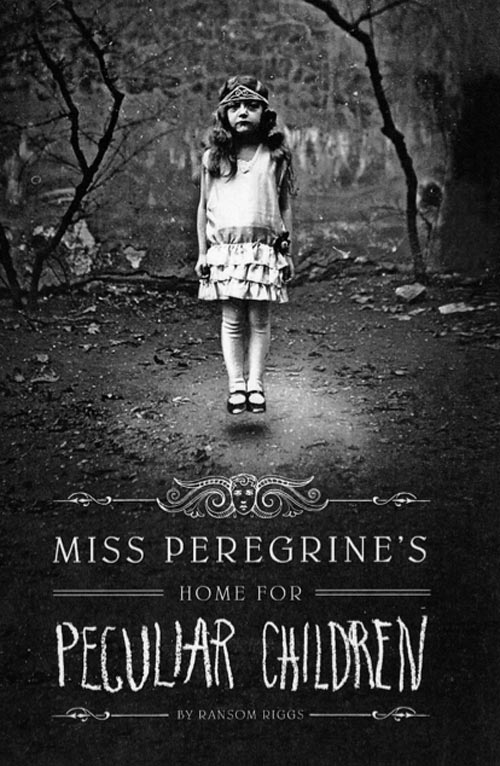
Miss Peregrine’s Home for Peculiar Children

“An extraordinary and terrible thing happened, and there was only Before and After.” – Jacob

Have you ever been reading a book and, slowly but suddenly, your eyes bulged out of their sockets as you took in exactly what was happening? Have you ever been completely shocked as a book lead you in an entirely different direction than the one that you had anticipated? Did you shake your head in disbelief but, deep down, know with certainty that you believed it all? If you’ve ever felt goosebumps creep along your arm, your body freeze in fear, or a racing heart, as if you, too, were running alongside the characters in a book, you know exactly what I am talking about.

You know all about my experience reading MISS PEREGRINE’S HOME FOR PECULIAR CHILDREN.

This is, undoubtedly, my top YA book for 2011. It is AMAZING. Simply marvellous. Unexpectedly artistic. Unexpected…everything. Contemporary. Terrifying. Delightfully creepy. Enchanting. Highly creative. A spine-tingling eeriness permeates the entire novel, from front to back, picture to picture. There is something magical about this book.

I loved it because it is not like the typical YA books I’ve read lately. I picked it up in the Young Adult section, but can it even be classified as YA? This is a book for everyone. Boys, girls, adults, teens, and your grandfather. Actually, I’ve never read anything like it. Ransom Riggs snagged my expectations and held them upside-down by the ankles.

Initially, I was attracted to the book’s intriguing cover: a little girl levitating in a forest. I thought, Well that spells paranormal/horror to me. Is this is a horror book? I’m not really a fan of horror due to my predilection to stay awake all night paralyzed in fear, or periodically glance behind me — keeping a wary eye out for monsters, villains, murderers, and the like — while doing perfectly normal things, like walking down the street. But curiosity won me over and I bought it.

There are a handful of terrifying moments, moments that, admittedly, I did take a second to look around my room, as though a three-eyed, multi-tongued monster may have materialized there, but it is not a scary story. It’s a little bit horrifying, fantastical, and comedic but cannot justly be classified as simply Horror, Fantasy, or Humor. Like I said, it’s hardly even YA. Confused? I know.

The book takes place in Florida, where 16-year old Jacob, our realistic, funny, and compassionate narrator, works at Smart-Aid, a drugstore of debilitating boredom (and one that his mother’s rich family owns). He is very close with his kind, secretive, military-minded grandfather on his dad’s side, Abraham, who always told him mysterious stories about his youth — about how he had fled during World War II, about the house that he grew up in, filled with peculiar children with peculiar abilities. One girl could levitate. One had a mouth in the back of her head. Another boy was invisible, and one could give life to inanimate objects. At this age, and after seeing his grandfather slip slowly into senility, Jacob eventually comes to terms with his grandfather’s beloved stories, believing them to be nothing more than fantasy and childish lore.

How wrong he is.

One day, Jacob comes home after a terror-filled phone call from his grandfather, and finds him dying. Shocked and heartbroken, Jacob holds him and listens to his last words: “Find the bird. In the loop. On the other side of the old man’s grave. September third, 1940…Emerson — the letter. Tell them what happened, Yakob.”

And that’s when Jacob sees it: a black monster with three tongues, staring out at him from the trees. And then it is gone. This is what murdered his grandfather. The story that follows is Jacob’s quest — through time and space — to decipher and fulfill those last words, while coming to grips with his own reality on a mysterious European island full of very, very peculiar children.

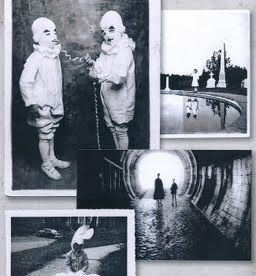
The vintage photographs add life, vitality, and the perfect dose of creepiness to the book — is the story centered around the pictures, or are the pictures centered around the story? It doesn’t matter. They blend perfectly. The best part is that they are all authentic, chosen from a vast array of collectors around the world, who are listed at the back of the book as “the unsung heroes of the photography world.”

Ransom Riggs is an excellent writer, effectively portraying the many sides to his endearing characters, especially Jacob’s insights and thoughts. He was such a well-developed character that I could instantly relate to him. The ending was a cliffhanger, leaving me unbearably curious. I can’t wait to read the next book. MISS PEREGRINE’S HOME FOR PECULIAR CHILDREN is a must-read.

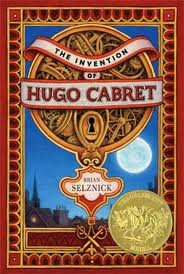
The Invention of Hugo Cabret

I didn’t read this book.
I experienced it.
You should, too.

The Invention of Hugo Cabret has 526 pages, and, in front of my own eyes, I have seen a child (one of those annoyingly loud, obnoxious, look-at-what-I-can-do types) brandish it in their friend’s face, bragging that they read the WHOLE thing.
Take THAT.
You may be wondering how it’s possible for a book of this enormity/size/weight to be read in its entirety by a small child. Well, over 250 pages are pictures. Beautiful, wondrous illustratrions sketched by the author and illustrator (and visual storyteller extraordinaire), Brian Selznick. Inspired by the story of early filmmaker Georges Méliès, Selznick, with a blend of historical fact, illustration, and film stills, tells the story of Hugo Cabret. The pictures are haunting, inspiring, and meaningful — I know everything that’s happening, and can feel every emotion the characters are feeling, simply by looking into their eyes. This is, undoubtedly, the best children’s book I have read all year, and the #1 Kids Lit Comfort book of 2011.

It is 1931.
The book opens by inviting the reader to imagine that they are at the movies, about to witness a spectacle. And you do, as the story begins. 30 pages later, there is still no text, but you have a clear and distinct idea of exactly what happened. The illustrations have filled in the blanks. There is a picture of the moon, then an aerial depiction of Paris — it’s nighttime in Paris. Hugo enters a secret passageway, watching a mysterious old man selling toys at a stand. The text finally begins with, “From his perch behind the clock, Hugo could see everything.”
Hugo Cabret is an orphan, clock-keeper, and occasional thief — out of necessity, of course. With his wayward, careless uncle, who is constantly disappearing, 12-year old Hugo lives a secret life in the walls of a busy Paris train station (from historical details revealed later in the book, the station is Gare Montparnasse). His father, having recently passed away, was the station’s clock-keeper, a position that Hugo resumes after his death. With Hugo is an automaton that his father rescued. Hugo believes that, once repaired, it will write a message that his father had for him — a message that will save his life. Hugo sets to work on the automaton, but things get complicated with the intrusion of the station inspector, meeting Isabelle, stealing from the elderly shopkeeper, and a long line of mysteries.
The novel is wonderfully innovative, highly imaginative, and completely endearing. A true genius.
Kirkus Reviews calls it “an homage to early filmmakers as dreamers…elegantly designed to resemble the flickering experience of silent film melodramas.”
It deserves all the attention it has received, and I recommend you all experience it!
The Invention of Hugo Cabret is a quick read, and one you won’t forget.
It won the Caldecott Prize, and is soon to be a film entitled HUGO, starring Sasha Baron Cohen and directed by Martin Scorsese. Watch the trailer below:

Juniper Berry

“For a while now, everything, including her, had been neglected.”

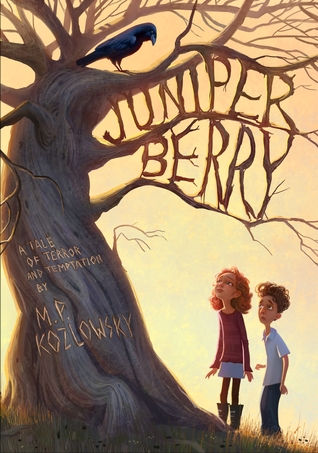
Juniper Berry by M.P Kozlowsky is the first in my Kids Lit Comfort series of reviews. Sometimes a reader just needs a break from dark themes or long, prose-heavy works, or, simply, the present reality of life. At times like these, the only logical thing to do is pick up a classic (or contemporary) middle-grade or children’s book and get swept into its comforting story, like sipping a marshmallow-laden hot chocolate and wrapping a deliciously warm, wool blanket around yourself. But don’t let the word “children” fool you — children’s literature touches on universal themes, delving into the joys and throes of human character in an extraordinarily entertaining (albeit shorter) way. Darkly amusing, terrifying, fun, mysterious, curious, or downright delightful, middle grade/kids lit is my antidote for a variety of ailments: sadness, depression, frustration, adult-ness, boredom, the overstressed, the overworked, and more. Though there are less pages and a smaller story, there is always a bigger picture. Less is more, and sentences of alarming alacrity hit you head-on, full-throttle. Children’s Lit is short, small, and packed. with. punch.

And M. P Kozlowsky’s Juniper Berry doesn’t disappoint — it is a fantastic read. The synposis: Juniper Berry’s parents, world-renowned actors/famous celebrities have “not been right lately”. In fact, they have been cold, disinterested and cruel. Obsessed with greedily augmenting their current success, their actions and responses to Juniper become frightening. Her mother calls her “useless” at one point, and begs to know what people are saying about her online.

“Juniper, dear, you go to all these websites, these gossip pages, posting boards. Have they been mentioning me? Where am I going? Where have I been?”

All in all, their behaviour has been shockingly uncharacteristic. Juniper is lonely, sad, and neglected; constantly exploring the woods, she admits that discovery and exploration are her salvation. Juniper and her friend, Giles (whose famous parents also seem to be afflicted with the mean bug), are determined to figure out what is going on. One cold and rainy night, Juniper follows her parents as they sneak out of the house and enter the woods. She and Giles discover a world beneath a mysterious tree, a world which promises all their secret, personal desires — at the price of their souls.

The evil, menacing, and manipulative…thing that rules this other world is eerily enticing, ensuring the children that “there are far easier ways to get to the same places” than hard work. Her parents, and Giles, have fallen into the trap, and the two have to have to save them — but first, decide what the value of their souls are.

Kozlowsky touches on the pathetic nature of celebrity culture, describing the parents’ fans akin to mindless, screeching crows lauding over food scraps, and the parents’ behaviour as terrifyingly self-absorbed. He makes a parody of today’s technology and our fickle fascination with computers and cell phones, portraying it as futile and mind-numbing. And he makes important points about morals, happiness and life throughout — points that are clearly and acutely felt, without feeling preachy.

Finally, the ARTWORK by Erwin Madrid is superb, creepily gorgeous, and haunting. Black and white, long, thin lines, curvy details, and deep shadows combine to give the book just the right flavour of mystery and fun. It’s a wonderful, frightening, and meaningful story, and I urge you all to give it a read!

Some poignant quotes:
“When this theme park ride is over, we’re going to walk out the same doors we walked in. There was no miracle.”

“The imagination of the young is nothing to be dismissed.”

“I have yet to meet a person happy with what they are given.”

“The only truth is the one we create. It’s the rest that is a dream.”

Where do you want to go?